Surah Al-Israa 17:36
سُورَةُ الإِسۡرَاءِ“The Night Journey”
Qur'an 17:36
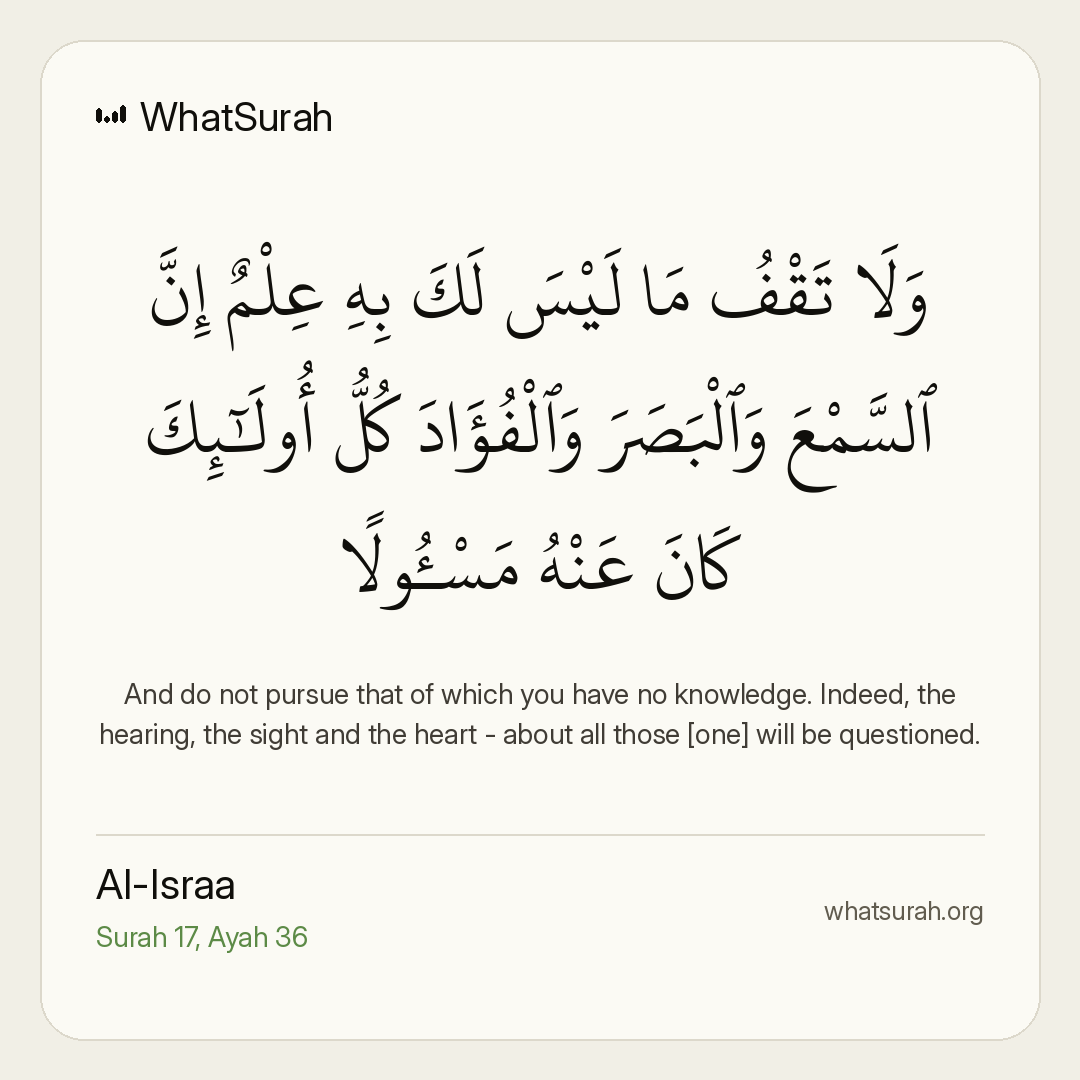
Wa laa taqfu maa laisa laka bihee 'ilm; innas sam'a walbasara walfu'aada kullu ulaaa'ika kaana 'anhu mas'oolaa
And do not pursue that of which you have no knowledge. Indeed, the hearing, the sight and the heart - about all those [one] will be questioned.
Tafsir of this Ayah Ibn Kathir
And follow not that of which you have no knowledge. Verily, the hearing, and the sight, and the heart of each of those ones will be questioned (by Allah)(36)
Do not speak without Knowledge
Ali bin Abi Talhah reported that Ibn 'Abbas said: "This means) do not say (anything of which you have no knowledge)." Al-'Awfi said: "Do not accuse anyone of that of which you have no knowledge." Muhammad bin Al-Hanafiyyah said: "It means bearing false witness." Qatadah said: "Do not say, 'I have seen', when you did not see anything, or 'I have heard', when you did not hear anything, or 'I know', when you do not know, for Allah will ask you about all of that." In conclusion, what they said means that Allah forbids speaking without knowledge and only on the basis of suspicion, which is mere imagination and illusions. As Allah says:
اجْتَنِبُوا كَثِيرًا مِّنَ الظَّنِّ إِنَّ بَعْضَ الظَّنِّ إِثْمٌ
(Avoid much suspicion; indeed some suspicions are sins.)[49:12] According to a Hadith:
إِيَّاكُمْ وَالظَّنَّ فَإِنَّ الظَّنَّ أَكْذَبُ الْحَدِيثِ
(Beware of suspicion, for suspicion is the falsest of speech.) The following Hadith is found in Sunan Abu Dawud:
بِئْسَ مَطِيَّةُ الرَّجُلِ: زَعَمُوا
(What an evil habit it is for a man to say, 'They claimed...') According to another Hadith:
إِنَّ أَفْرَى الْفِرَى أَنْ يُرِيَ الرَّجُلُ عَيْنَيْهِ مَا لَمْ تَرَيَا
(The worst of lies is for a man to claim to have seen something that he has not seen.) In the Sahih it says:
مَنْ تَحَلَّمَ حُلْمًا كُلِّفَ يَوْمَ الْقِيَامَةِ أَنْ يَعْقِدَ بَيْنَ شَعِيرَتَيْنِ وَلَيْسَ بِفَاعِلٍ
(Whoever claims to have seen a dream (when he has not seen) will be told on the Day of Resurrection to make a knot between two barley grains, and he will not be able to do it.)
كُلُّ أُولَٰئِكَ
(each of those ones) means these faculties, hearing, sight and the heart,
كَانَ عَنْهُ مَسْئُولًا
(will be questioned.) means, the person will be asked about them on the Day of Resurrection, and they will be asked about him and what he did with them.
Embed this Ayah
Paste the code below into your website or blog. Choose the look that fits your site.